Pinpoint The LeakNot The Whole Slab
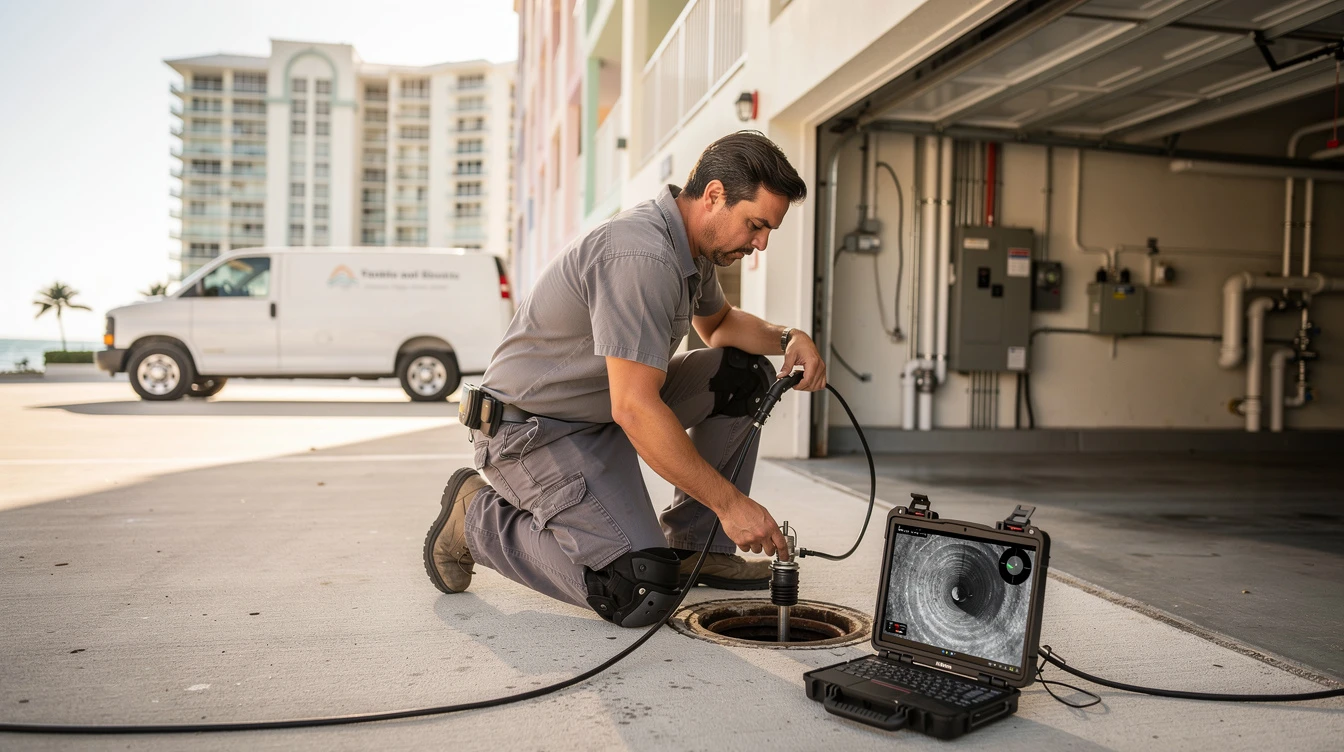
A pipe rarely fails where you can see it. It seeps quietly under tile, behind a shower wall, or beneath the foundation while your water bill climbs and mold gets a head start. Our technicians trace the sound and heat signature of moving water usingacoustic sensors, tracer gas, and infrared imaging so the opening we make is the smallest one possible, serving Hallandale Beach and the surrounding tri-county area.
What a hidden leak usually looks like
Nobody added a pool or an extra shower, yet the county sent a bill that's noticeably higher than last month. A supply line hidden in a wall or under the floor doesn't stop running just because nobody sees it.
A tile that stays noticeably warmer than the rest of the room often sits above a hot-side pipe break. Cupped wood, a loose grout line, or a soft spot in laminate points to moisture working its way up from below.
Shut off every faucet and appliance, then listen near a wall or floor. A soft continuous hiss is water forcing its way through a crack, and it's the exact frequency our acoustic equipment is built to isolate.
Coastal humidity accelerates everything. A slow drip inside a wall cavity can breed mold in just a few days, and an earthy odor near a baseboard or cabinet is one of the clearer signs something is wrong out of sight.
If your once-strong shower has turned to a trickle, an aging copper or galvanized line may be losing pressure through a small crack somewhere along its run instead of delivering it to the fixture.
You shut off everything in the house and watched the little dial on your meter keep ticking anyway. That's about as clear a confirmation as it gets, and it's exactly the case our team is built to solve.
Check your meter before you dial anyone
You can rule a leak in or out in about ten minutes without any special tools. Turn off every fixture in the house, including the ice maker line and any irrigation timer, and confirm no toilet is mid-refill. Locate your water meter, usually a small box near the curb or property line, lift the lid, and note the reading along with the position of the small leak indicator dial if it has one. Walk away for twenty minutes, use nothing, then check it again. Any movement at all means water is going somewhere it shouldn't. To narrow the location further, shut the main valve at the house and repeat the test: a meter that stops moving points to a leak inside the home, while one that keeps spinning suggests the break is between the meter and the house. Note your results and we'll pick up from there.
Six steps from suspicion to a marked spot
We pressure-test your plumbing to verify a real supply-side leak and rule out irrigation, pool equipment, or drain trouble that mimics the same symptoms. Splitting hot and cold tells us which side of the system to chase.
Ground microphones amplify the sound of escaping water through concrete and soil. On a slab home we methodically move across the floor, marking where the signal is loudest until a clear peak stands out.
On tougher cases, an inert tracer gas travels through the pipe and surfaces above the break, giving us a second, independent signal that confirms or corrects the acoustic reading before anything gets marked.
A thermal camera picks up the heat or cold trail a leak leaves behind in flooring and drywall. A hidden hot-water line glows warm on screen, while a moisture pocket behind a wall shows up as a cool shadow, either way sealing the location.
The exact spot gets marked, photographed, and logged alongside our readings in a written report. Filing a claim later becomes far simpler when there's a clear record of what we found and where.
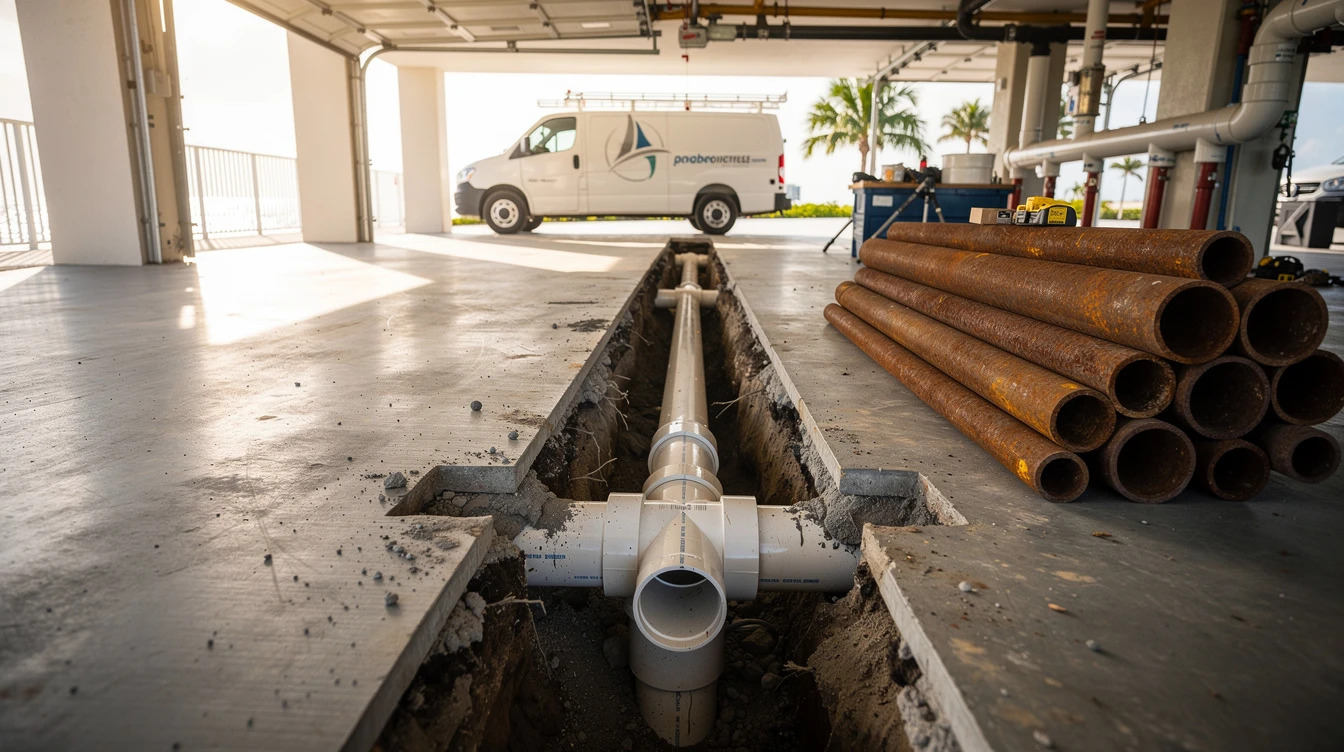
Once we know exactly where the problem lives, we walk you through the ways to fix it: a small spot repair, a rerouted line that avoids re-opening the slab, or a broader repipe if the system is failing in multiple places. You decide before we touch a tool.
Why one visit costs more than another
Every property is different, and so is every leak. Here's what genuinely changes the scope of a detection visit, and you'll always see the number before any work begins.
- Depth of the problemAn exposed pipe behind an access panel reads fast; a break deep under a foundation slab takes longer and more equipment to isolate.
- Footprint of the propertyA large single-story home has far more pipe run to search than a small condo unit.
- Type of flooring above itThick stone and layered slab installations dampen sound and slow down an acoustic search compared to standard tile.
- How many pinholes are hidingOlder galvanized and copper systems frequently have more than one weak point, and each has to be located on its own.
- Report requirementsA full insurance-grade write-up with imaging and readings simply takes more time than a quick verbal locate for your own peace of mind.
- Getting to the suspect areaBuilt-ins, furniture, and tight crawl spaces all add time before a reading can even begin.
Based in Hallandale Beach, working the whole tri-county stretch
Broward County
- Hallandale Beach
- Hollywood
- Fort Lauderdale
- Pembroke Pines
- Miramar
- Davie
Miami-Dade County
- Aventura
- Miami
- North Miami Beach
- Sunny Isles Beach
- Miami Beach
Palm Beach County
- Boca Raton
- Deerfield Beach
- Pompano Beach
- Plantation
- Delray Beach
Real jobs, real leaks, no guessing
Our bill nearly tripled in one billing cycle and we had no idea why. They came out, ran their listening equipment across the kitchen and hallway, and found a pinhole in about twenty minutes. Fixed the same afternoon.
I had a musty smell in a closet for weeks and no idea where it was coming from. The infrared camera showed a cold patch behind the drywall, and sure enough there was a slow leak feeding it. Paperwork they gave me made the claim simple.
"Another company wanted to open up two walls just to look. This crew tested the lines, listened for the sound of the leak, and marked one small spot near the bathroom. Clean, quick, and they explained every step."
"A section of tile in the hallway stayed warm no matter what. Turned out to be a hot water line under the slab. They pinpointed it, gave us a clear quote, and rerouted the line instead of tearing up the whole floor."
Leak Detection, Answered
Can you find a leak without breaking up my slab first?
That's the point of the equipment we use. Ground microphones pick up the sound of pressurized water escaping through concrete, and thermal imaging catches the temperature difference a leak leaves in flooring. Between the two, most slab leaks in this area get located without touching a single tile. We only open the floor once we know exactly where to cut, so the repair, not the search, is the only part that involves demolition.
Is your detection method actually non-destructive?
Yes. Acoustic listening, tracer gas, and infrared imaging all work by reading signals through your existing walls, floors, and ceilings rather than cutting into them. We might tap a wall or press a sensor against tile, but nothing gets opened during the search phase itself. The only cutting happens afterward, at the marked spot, when you've approved a repair.
How close can you actually get to the exact spot?
For most single-source supply leaks, we mark within a few inches of the actual break. Confirming a reading with a second method, say an acoustic hit backed up by a thermal signature, tightens that accuracy considerably. Thick stone flooring, deep slabs, and multiple leaks running at once make things harder, so we work the grid methodically instead of stopping at the first hint of a signal. If something reads unclear, we say so rather than cutting on a guess.
Will your report actually help with an insurance claim?
We put together a written findings report that covers where the leak was located, what likely caused it, and the readings that back it up, including thermal images when we used them. Adjusters generally want to see documented proof of a sudden or hidden failure before they'll move a claim forward, and having that ready ahead of time cuts down on delays. Tell us if you're filing a claim and we'll build the report with that in mind from the start.
What determines what a visit will cost?
Cost tracks with difficulty: how buried the leak is, how large the property is, what kind of flooring we're reading through, and whether there's more than one source to track down. A single leak behind an accessible panel is a short visit. A slab leak under stone tile in a big house takes longer and more equipment. Adding a full written report for insurance purposes adds a bit more time on top of that. We look the job over, explain what's driving the price, and get your approval before any work starts.
Schedule A Locate
Stop wondering where it's coming from
Every day a leak goes unfound, it keeps padding your water bill and giving mold a foothold in our humid climate. Get a technician on-site to pinpoint it without tearing your home apart, backed by documentation you can hand straight to your insurer. CFC1433655.